Posts

Arrive IN and Arrive AT

☝️Remember! 》We arrive IN a large area. ▪I'll arrive in London at 6. ▪We arrived in France at noon. 》We arrive AT a small place. ▪He arrived at the school on time. ▪I arrived late at the office. ⚠️We NEVER arrive "to" a place.

Holt Vocabulary Workshop Fourth Course Lesson 13

Holt Vocabulary Workshop Fourth Course Lesson 13 Holt Vocabulary Workshop Fourth Course Lesson 13 from Mr. El-Sayed Ramadan

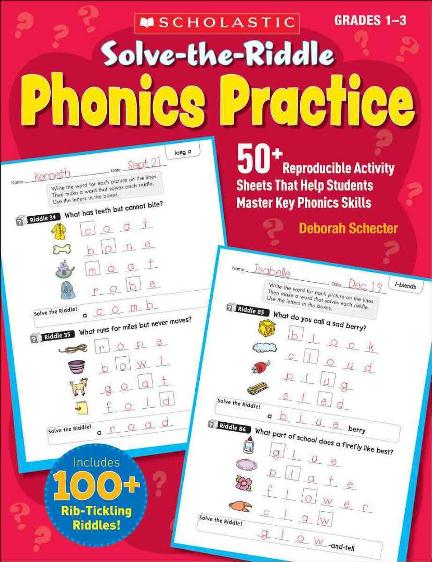
Solve-the-Riddle Phonics Practice Grades 1-3

Image
Solve-the-Riddle Phonics Practice Grades 1-3

Can-Cannot

Image
Can-Cannot This an easy activity which can be done in the classroom or given as homework. The students are asked to match the pictures with verbs/activities by using 'can'. Visual make it easy to understand. After matching the pictures, the students can be asked to write some sentences by using 'can' and 'can't' about themselves.

Grinch [multiple choice]

Image
Task description & scene summary Task description: Observation and understanding of what is happening on the screen, then selecting the right answer among the options. Scene summary: Some guys just love to be in bad moods and make themselves and other people feel miserable. Grinch is one of these fellows. Let's see how he can manage to do mean things "in style". Video URL:  https://www.youtube.com/watch?v=Bf6D-i8YpHg Video length:  2 minutes 49 seconds Video genre:  Film trailer Lesson type:  Asking about the visuals ("What can/could you see?") Level:  Elementary (A1) Pre-intermediate (A2) Student types:  elementary school Copyright license:  Creative Commons Attribution License First published:  2019-01-31, 08:29:23 (GMT+1) Video quiz questions (printable) 1) The little yellow guy switched on ... a fan. a flashlight. a television. a lamp. 2) The little yellow guy suddenly turned to be ... happy. hungry. sleepy. scared. 3) We were flying throu...

Printable Valentine Worksheets for Elementary Students

Image
Printable Valentine Worksheets- 'Love Is An Open Door' Writing for K–5  With Valentine's Day approaching you may be looking for fun activities to incorporate into your literacy block. In this article, you'll find free printable Valentine worksheets that will get elementary students writing. Inspired by the Disney ® movie  Frozen , I've created the  Love Is An Open Door  Writing Activity.  Source:  SADLIER

Making suggestions

Image
Making suggestions  -- Shall we...?  -- Why don't we...?  -- How/What about...?  -- We can/could...  -- Let's...  Shall we visit Joe tonight?  Why don't we meet tomorrow?  How about doing some shopping?  Let's go to a restaurant.

Astonishing : مذهل، مدهش، رائع، مثير للدهشة

Image
Astonishing : مذهل، مدهش، رائع، مثير للدهشة #synonyms 》Amazing 》Astounding 》Impressive 》Staggering 》Stunning 》Striking 》Startling Leo Messi's qualities are astonishing. Some astonishing prehistoric remains were discovered here some years ago.

Provoke, Invoke, Evoke, and Revoke

Image
Provoke, Invoke, Evoke, and  Revoke  Provoke = استفزاز، أثارغضب شخص ما  Invoke = ناشد، توسل  Evoke =استدعاء، تذكر  Revoke = حذف، إالغاء

Synonyms (basic word - more formal word)

Image
Synonyms (basic word - more formal word) Ask - Inquire  Boring - Insipid  Delicious - Delectable  Extra - Superfluous  Greedy - Avaricious  Happy - Jubilant  Poor - Destitute  Productive- Fruitful  Shine - Glimmer  Tired - Fatigue

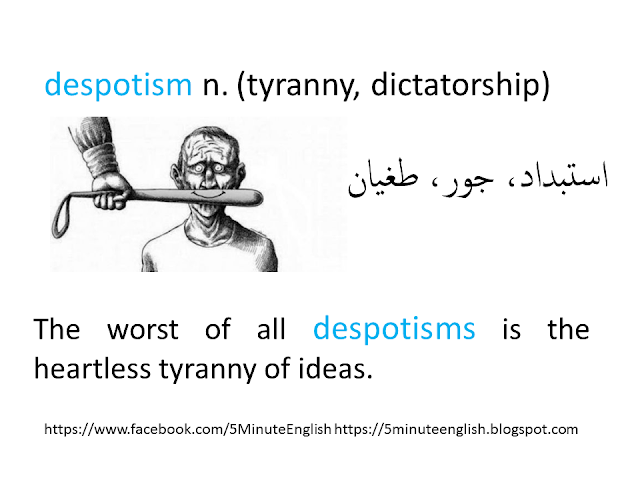
despotism n. (tyranny, dictatorship) استبداد، جور، طغيان

Image
despotism n.   (tyranny, dictatorship)   استبداد ، جور، طغيان The worst of all despotisms is the heartless tyranny of ideas.

Types of Sentences Worksheet

Image
Types of Sentences Worksheet Types of Sentences Worksheet from Mr. El-Sayed Ramadan Download 

Who’s and Whose

Image
Whose is the possessive form of the pronoun who, while who’s is a contraction of the words who is or who has. Example sentences using who’s  My uncle is someone who’s living in Egypt.  Ahmed told me who’s coming to the party. Example sentences using whose  Whose cat chewed up my homework?  The ring came from a fire whose light was bright like a star.

Hostility - حِقْد ؛ عَدَاوَة ؛ عِدَاء

Image
Hostility = unkindness, anger, bitterness, unfriendliness, opposition =  حِقْد ؛ عَدَاوَة ؛ عِدَاء  In particular , Mr . Eltayeb pointed to the need to distinguish between speeches that advocate religious hatred that constituted incitement to discrimination , hostility or violence , and those that did not. أشار السيد الطيب بوجه خاص إلى ضرورة التمييز بين الخطب الداعية إلى الكراهية الدينية والتي تشكل تحريضا على التمييز أو العداوة أو العنف والخطب التي لا تدعو إلى ذلك.

Cure

Image
Collocations. 》Cure /kjʊə/  1. Noun A cure + for  There is no known cure for Alzheimer's Disease.  2. Verb To be cured + of  He was completely cured of his illness.

these and those

Image
The words these and those should only be used with plurals.  I have never seen these kind of boxes before. (...these kinds of boxes )  Sarah is not used to those type of situations. (...those types of situations )

How to spot a common noun and a proper noun?

Image
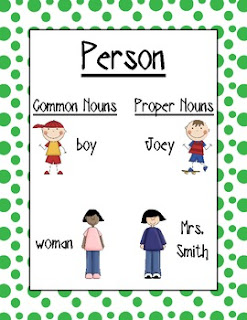
How to spot a common noun and a proper noun? A common noun answers the question "What is it?" Q: What is it? A: It is a bridge. A proper noun answers the question "What's its name?" Q: What's its name? A: It is Talkha Bridge.

Whoever vs. Whomever

Image
 Whoever vs. Whomever Don’t Say: Give the tickets to whomever can use them.  Say Instead: Give the tickets to whoever can use them. Here’s Why: You may have been tempted to say “whomever” here, because it may seem to be the object of “to.” But actually the object of “to” is the whole final clause “whoever can use them.” Within that clause, the pronoun is the subject of the verb “can,” so the subjective case is required, and that’s “whoever.”  Grammatically, “whoever” and “whomever” work the same way that “who” and “whom” do. Wherever you would use “who,” you use “whoever,” and wherever you would use “whom,” you use “whomever.” “Whoever” can be used as the subject of a verb, for example: Whoever took my belt had better give it back.  Whoever said that was crazy. “ Whomever ” can put in an appearance as a verb’s object: Please bring whomever you like to the picnic. But these pronouns get tough when it’s hard to tell which part of the sentence determines which pronoun w...